
Understanding Macronutrients in Frozen Dinners: Protein, Carbs & Fats
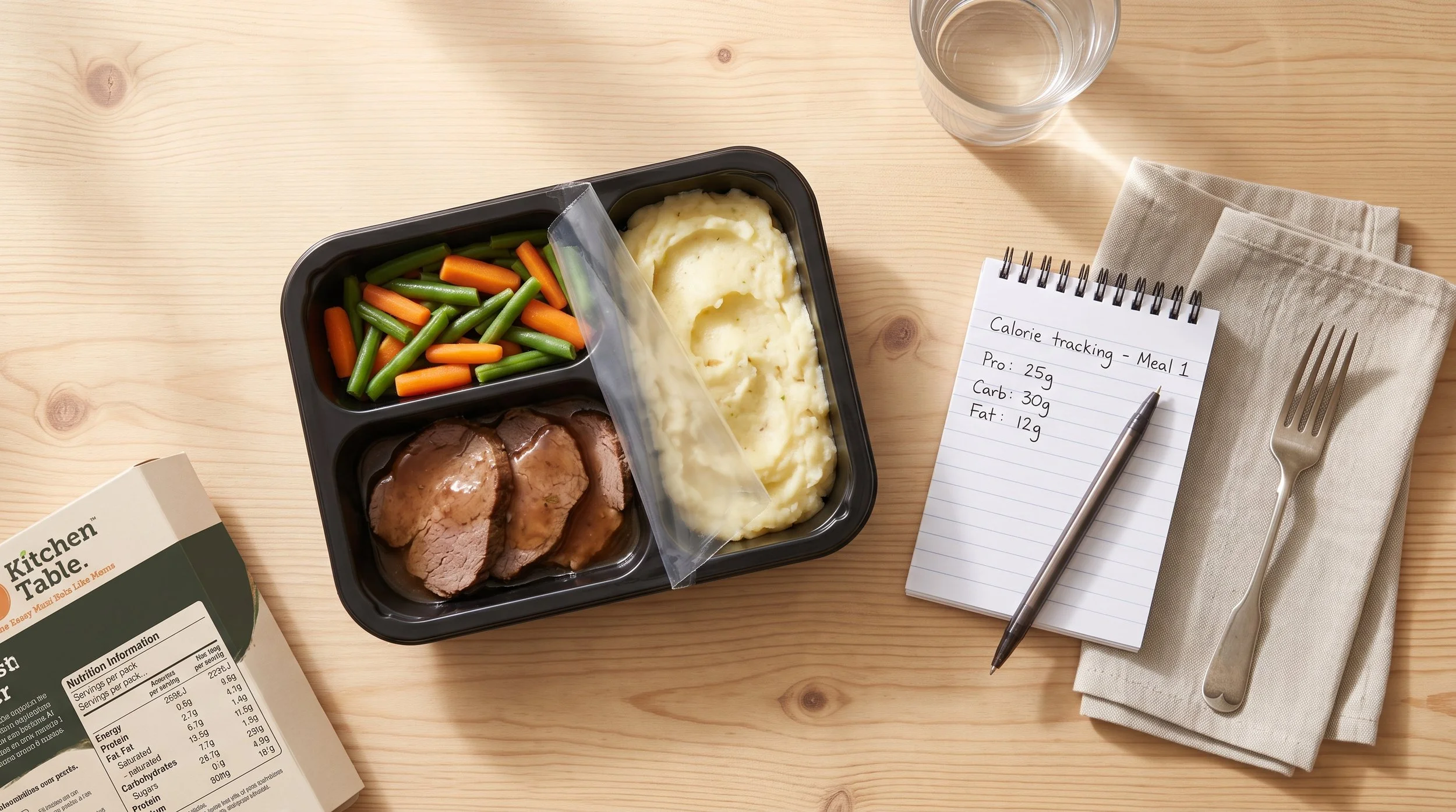
Why Your Frozen Dinner Might Be Working Against You
Here's the honest truth: most people grab a frozen dinner because they're short on time, not because they've checked whether it actually fits their goals. You've probably stood in front of the freezer aisle, flipped a box over, stared at a wall of numbers, and put it back down feeling none the wiser. That's not your fault — nutrition labels weren't exactly designed with a busy Tuesday night in mind.
If you're trying to build muscle, manage your weight, or simply eat in a way that keeps you full and steady through the afternoon, the balance of protein, carbs and fat in your meal matters just as much as the calorie count. A 500-calorie dinner loaded with refined carbs and almost no protein will leave you hungry an hour later. A 500-calorie dinner with a solid protein hit and some healthy fat will keep you satisfied and support your training. Same calories, very different results.
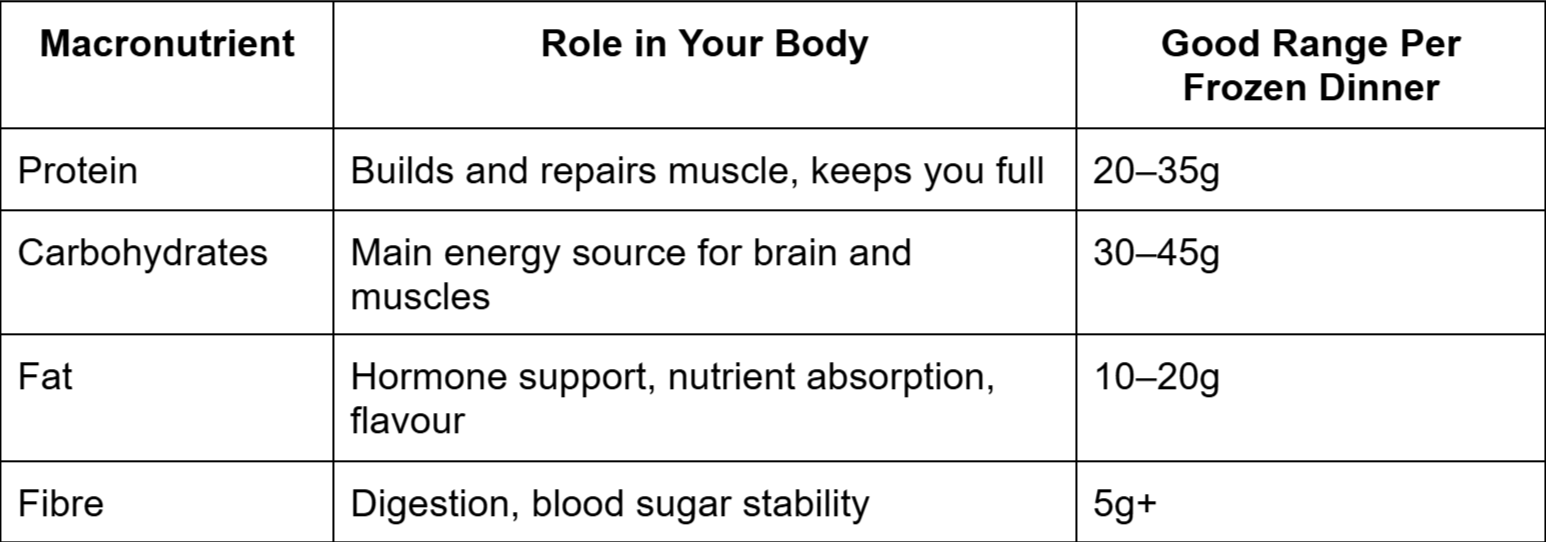
Balanced macros in a frozen dinner generally means roughly 25–35g of protein, moderate complex carbohydrates (30–45g), and a moderate amount of healthy fat (10–20g) per serving, with fibre included where possible. Look for meals where protein is listed near the top of the ingredients, whole food carb sources instead of refined starches, and fat that comes from real ingredients like olive oil, cheese or meat rather than vegetable oil blends. Ready-made meals from My Kitchen Table are built around real, whole ingredients, so the macro balance comes from the recipe itself rather than an additive.
Key Takeaways
Balanced macros in a frozen dinner sit around 20–35g protein, 30–45g carbs, and 10–20g fat per serving.
Protein and fibre are what actually keep you full — not the calorie count alone.
Always check the ingredients list, not just the nutrition panel, to spot fillers versus real food.
Whole-ingredient meals naturally land closer to a balanced ratio than mass-produced, starch-heavy ones.
Matching your meal choice to your goal (muscle building, weight management, plant-based) makes the biggest practical difference.
What This Guide Covers
This guide breaks down what macronutrients actually are, why the ratio between them matters more than the total calorie number, and exactly how to check a frozen meal's nutrition panel in under ten seconds. By the end, you'll be able to walk into any supermarket freezer aisle — or scroll through an online shop — and know straight away whether a meal will support your goals or quietly work against them.
What Are Macronutrients, Really?
Macronutrients are the three nutrients your body needs in large amounts to function: protein, carbohydrates, and fat. Each one does a different job, and none of them is "bad" — despite what a lot of fad diets would have you believe.
Protein repairs and builds muscle tissue, supports your immune system, and keeps you feeling full for longer than carbs or fat alone. Carbohydrates are your body's preferred and fastest source of energy, fuelling your brain, your workouts, and your daily movement. Fat supports hormone production, helps you absorb certain vitamins, and adds flavour and satisfaction to a meal.
The problem isn't any single macronutrient — it's imbalance. A meal that's almost all carbohydrate with barely any protein spikes your blood sugar and leaves you hungry soon after. A meal drowning in fat but light on protein can sit heavily without actually fuelling your muscles. Balance is what makes a meal work for you instead of against you.
Why Balanced Macros Matter More in Frozen Dinners
You'd think a frozen meal and a home-cooked one would follow the same nutrition rules, and in theory, they do. In practice, many mass-produced frozen dinners lean heavily on cheap fillers — pasta, rice, breading, and thickened sauces — because refined carbohydrates are inexpensive to produce at scale. That's how you end up with a "chicken" dinner that's mostly noodles and sauce, with a few token pieces of chicken scattered through it.
This matters most if you're training regularly, trying to manage your weight, or just trying to stop the 3pm energy crash. Protein takes longer to digest, so it keeps blood sugar steadier and appetite quieter between meals. Meals built around whole cuts of meat, seafood, legumes or eggs — rather than around a pasta or rice filler — tend to naturally land closer to a balanced ratio.
At My Kitchen Table, meals like the Beef Bourguignon, Fisherman's Pie and Cottage Pie are built around a solid protein base first, with vegetables and carbohydrates added to round the meal out — not the other way around.
How to Read a Frozen Dinner's Nutrition Label in Under a Minute
Turning a frozen meal box over can feel like reading a different language. Here's the simple version.
Start with the serving size. All the numbers on the label only apply to that single serving, and some boxes sneakily list two servings for what most people eat in one sitting. Check this first, or every other number you read will be wrong.
Check protein per serving. For a main dinner, aim for at least 20–30g of protein. Anything under 15g for a full meal usually means the dish is leaning too heavily on carbs or fat to make up the calories.
Look at the carbohydrate source, not just the number. A meal with 40g of carbs from vegetables, legumes and whole grains behaves very differently in your body than 40g of carbs from refined pasta or white rice, even though the label number looks the same. Fibre content is your clue here — higher fibre usually means a slower-releasing, more filling carbohydrate.
Glance at the fat, then check the type. Total fat between 10–20g per serving is reasonable for a dinner. If you can, check whether it's coming from olive oil, dairy or meat (normal) versus long lists of processed vegetable oils and emulsifiers (a sign of a heavily processed product).
Scan the ingredients list, not just the nutrition panel. This is the part most people skip, and it tells you the real story. If the first three ingredients are water, wheat flour and modified starch, that meal is built around bulk, not nutrition — regardless of what the calorie count says.
A Simple Macro Reference Table
The Benefits of Choosing Frozen Dinners with Balanced Macros
Getting this balance right isn't just a nutrition technicality — it changes how your day actually feels.
You stay fuller for longer, because protein and fibre slow digestion compared to a carb-heavy plate on its own. Your energy stays steadier through the afternoon instead of spiking and crashing an hour after eating. If you train or exercise regularly, adequate protein at dinner supports the muscle repair that happens while you sleep. And because you're not left hungry an hour later, you're less likely to reach for a second, less healthy snack — which quietly helps with weight management over time, without you having to think about it too hard.
This is exactly why home-style meals built from real ingredients tend to outperform ultra-processed ones on paper and in practice. A Lamb Tagine or Chicken and Vegetable Soup made with whole cuts and real vegetables simply behaves differently in your body than a mass-produced ready meal built around cheap starch.
Choosing the Right Frozen Dinner for Your Goals
Not every dinner needs identical macros — your goals should guide the balance you look for.
If you're focused on muscle building or recovery from training, prioritise meals with 30g or more of protein, such as heartier options like Beef Lasagne or Beef Bolognaise. If you're managing your weight, look for meals with a strong protein-to-carb ratio and generous vegetable content, which naturally increases fibre and fullness without adding many calories. If you eat plant-based, legume-forward dishes like Red Lentil Dahl provide plant protein alongside slow-releasing carbohydrates, which is a genuinely useful combination often missing from vegetarian ready meals.
It's also worth building a mixed rotation rather than eating the same single dish on repeat. Boxes like the Everyday Value Box or the 7 Meal Starter Box let you sample a spread of protein sources — beef, chicken, seafood and plant-based — across a week, so you're not relying on one macro profile for every dinner.
Making the Switch: Your Next Step
Once you know what to look for, checking a frozen dinner's macro balance takes seconds, not minutes. The real work is choosing meals made from ingredients you'd recognise in your own kitchen, rather than a long list of stabilisers and fillers doing the heavy lifting.
If you'd rather skip the label-reading altogether, every meal from My Kitchen Table is prepared from whole ingredients with a genuine protein focus, so the balance is built in from the start. You can browse the full range in the shop, check how delivery works in your area, or read through the simple ordering process to get a week of balanced dinners sorted without the guesswork. Got a question first? The FAQs page covers most of them, and the team is always reachable through Contact Us.
Wrapping It Up: Eating Well Doesn't Have to Take Longer
Choosing a frozen dinner with balanced macros isn't about becoming a label-reading expert overnight — it's about knowing three or four things to glance at before it goes in your trolley or your cart. Protein first, real carb sources second, sensible fat third, and an ingredients list you can actually understand. Get those right, and a frozen dinner can genuinely support your goals instead of undoing them.
If you'd rather have that balance sorted for you, explore what's cooking on the My Kitchen Table blog or head straight to the shop to find your next week of dinners.