
Freezer Storage Hacks: How to Maximise Space & Preserve Meal Quality
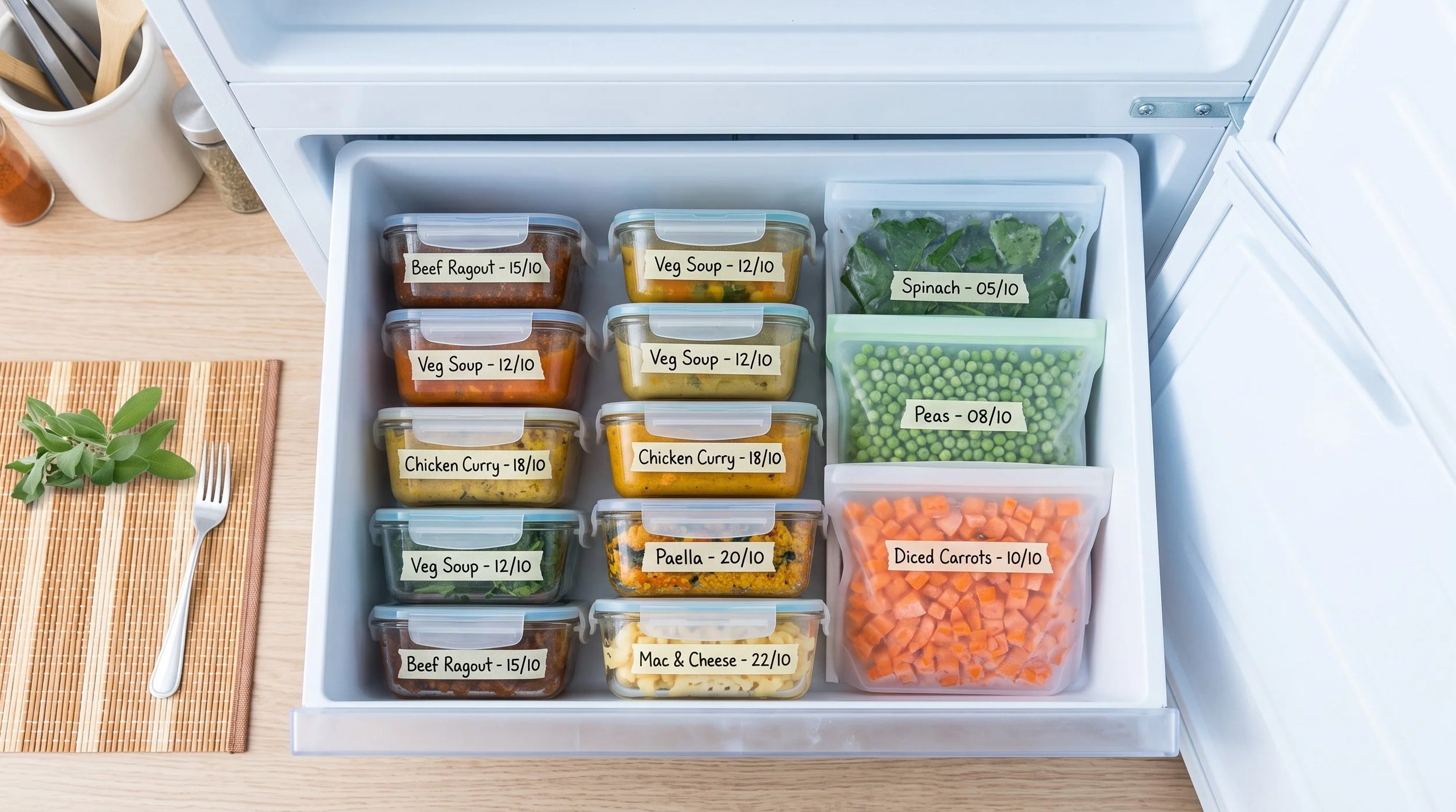
Is Your Freezer Fighting You Instead of Helping You?
You open the freezer door, and it happens again. A bag of peas tumbles out. You dig past three mystery containers to find the meal you actually want. By the time you find it, you've lost patience — and maybe dinner plans for the night.
If this sounds familiar, you're not alone. A messy freezer is one of the biggest reasons home-cooked meal prep falls apart. It's not that you lack discipline. It's that most freezers simply aren't set up to work with you.
Freeze meals flat in stackable, freezer-safe containers to save up to 50% more space than round tubs.
Label everything with the meal name and date — frozen food loses its identity fast.
Use the "first in, first out" rule so older meals get eaten before newer ones.
Keep your freezer at -18°C or colder, and don't overpack it — air needs to circulate.
Most cooked meals stay at their best quality for 2–3 months in the freezer.
Good containers matter more than a bigger freezer.
Key Takeaways
Choose airtight, stackable, freezer-safe containers over odd-shaped tubs
Freeze bags and pouches flat, then stand them upright to save space
Push out air and cool food fully before freezing to prevent freezer burn
Label every container with the meal name and date
Eat cooked meals within 2–3 months for the best flavour and texture
A tidy freezer means less waste, faster dinners, and a lower grocery bill
What Freezer Storage Really Means for Meal Prep
Freezer storage tips for meal prep containers are really about one thing: making your freezer work like a tidy, well-organised pantry instead of a black hole. When you get this right, you save money, waste less food, and always have a proper meal ready on a night when cooking feels impossible.
This isn't about buying fancy gadgets. It's about choosing the right containers, packing them the smart way, and setting up a system you'll actually stick to. Once your freezer is organised, meal prep stops feeling like a chore and starts feeling like a head start on your week.
Below, we'll walk through exactly how to choose the best containers, stack and label them properly, stop freezer burn in its tracks, and keep your food tasting as good as the day you cooked it.
Why Good Freezer Storage Matters More Than You Think
Poor freezer storage doesn't just waste space — it wastes food and money. Food that gets buried, forgotten, or damaged by freezer burn usually ends up in the bin. Studies on household food waste consistently show that freezers are one of the top places good food goes to die, simply because it's out of sight and out of mind.
On the flip side, a well-organised freezer stretches your grocery budget further. You can batch-cook on a quiet Sunday, freeze in proper portions, and always have a backup dinner ready. This is exactly the kind of convenience that My Kitchen Table's meal boxes are built around — chef-made meals designed to store beautifully and reheat perfectly, so you always have something good to eat without the last-minute scramble.
Choosing the Right Meal Prep Containers for the Freezer
Not all containers are created equal, and this is where most people go wrong. The container you choose affects everything from how much food you can fit to how long it stays fresh.
Look for These Three Things
The best freezer-safe containers share three traits: they're airtight, stackable, and made from freezer-grade material that won't crack in the cold. Glass containers with snap-lock lids are excellent for durability and don't absorb odours or stains, though they're heavier and can crack if filled to the brim with liquid (food expands as it freezes, so always leave a little headroom).
BPA-free plastic containers are lighter, cheaper, and often stack more efficiently — ideal if you're freezing a large batch of meals at once. Silicone bags and reusable pouches are brilliant for soups, curries, and sauces, since they freeze flat and take up very little room once solid.
Match the Container to the Meal
A thick stew or curry does well in a rigid container, since it holds its shape and reheats evenly. Lighter meals, like soups or bolognese, freeze beautifully flat in silicone bags, which you can then stack like books once frozen solid. If you're prepping meals for one, single-serve containers make portion control effortless and mean nothing goes to waste.
How to Organise Your Freezer Like a Pro
Once you've got the right containers, the next step is setting up a system. This is where you turn a chaotic freezer into one that actually saves you time.
Freeze Flat, Then Stand Up
If you're using bags or pouches, lay them flat on a tray until solid, then stand them upright like files in a drawer. This single trick can nearly double your usable freezer space, because flat, uniform shapes stack far more efficiently than lumpy, rounded containers.
Group by Meal Type or Week
Keep similar meals together — soups in one section, mains in another, and single portions somewhere easy to grab. Some people find it helpful to organise by the week they plan to eat the meal, so it's obvious at a glance what's coming up for dinner.
Use a Simple Freezer Map
A small whiteboard or a piece of paper taped to the freezer door, listing what's inside and where, saves you from opening the door and losing cold air while you search. It sounds simple, but it's one of the most effective habits for cutting down food waste.
How to Prevent Freezer Burn on Prepared Meals
Freezer burn happens when air reaches your food and draws out its moisture, leaving those grey, dry patches that ruin texture and flavour. The fix is simpler than most people think.
Push out every bit of air before sealing a container or bag. For bags, press flat and roll from the bottom to force air out before zipping. For rigid containers, press a piece of baking paper or cling film directly onto the surface of the food before putting the lid on — this stops air pockets from forming.
Cool food completely before freezing. Putting warm food straight into the freezer creates condensation, which turns into ice crystals and speeds up freezer burn. Give meals 20–30 minutes to cool at room temperature, then pop them in.
Keep your freezer full but not crammed. A freezer that's too empty has more air circulating around each item, which speeds up freezer burn. A freezer that's overstuffed can't maintain an even, cold temperature. Aim for around three-quarters full for the best results.
How Long Cooked Meals Last in the Freezer
Most home-cooked meals stay genuinely delicious for 2 to 3 months in the freezer, and safe to eat for up to 6 months if stored properly. After that window, they're often still safe but the texture and flavour start to fade — particularly with dishes that have a lot of sauce or dairy.
Here's a simple rule worth pinning to your fridge: if you can't remember when you froze it, treat it as due for the bin. That's exactly why labelling matters so much, and it's a habit worth building from day one.
The Labelling System That Actually Works
Grab a roll of masking tape and a marker, and write two things on every container: the meal name and the date it was frozen. That's it. It takes ten seconds and saves you from the guessing game every single time.
For an even smoother system, try colour-coded tape for different meal types — one colour for mains, another for soups, another for sides. This turns your freezer into something you can scan in seconds, rather than something you have to dig through.
If cooking and labelling every week feels like one task too many, this is exactly the gap that My Kitchen Table fills. Every meal arrives ready-labelled, chef-prepared, and designed to store beautifully in your freezer — so the hard part is already done for you.
Key Benefits of a Well-Organised Freezer
Getting your freezer storage right pays off in ways that go beyond a tidy shelf. You'll notice:
Less food waste, because nothing gets lost or forgotten at the back
More usable space, often 30–50% more once you switch to flat, stackable containers
Faster weeknight dinners, since you can see exactly what's available at a glance
Better-tasting meals, thanks to proper sealing and shorter time in storage
Lower grocery bills, because batch-cooked and pre-portioned meals stretch further
Ready to Simplify Your Freezer? Here's Your Next Step
You don't need to overhaul your whole kitchen to get these benefits. Start small: pick up a few good stackable containers, freeze your next batch flat, and label everything as you go. Within a week or two, you'll notice the difference every time you open that door.
And if you'd rather skip the batch-cooking altogether some weeks, browse My Kitchen Table's meal range for chef-made dishes that freeze and reheat beautifully — from a comforting cottage pie to a rich beef bourguignon or a warming chicken and vegetable soup. Check out delivery information or read how to order to get your freezer stocked with meals that make dinner easy. You can also find out more about us or explore where to buy our meals in New Zealand.
Bringing It All Together: A Freezer That Works for You
A well-organised freezer isn't about being obsessively tidy — it's about making your evenings easier. When you can open the door and see exactly what's there, dinner stops being a source of stress. With the right containers, a simple labelling habit, and a system for what goes where, your freezer becomes one of the most useful tools in your kitchen.
And on the nights when even reheating feels like too much, remember that My Kitchen Table is there with meals made for exactly this kind of freezer. Have a browse through our FAQs or get in touch if you have any questions — we're always happy to help you eat well without the stress.
Frequently Asked Questions
-
Choose BPA-free, airtight containers labelled with the date, freeze meals flat where possible, and keep your freezer at -18°C. Stackable containers save the most space, and grouping meals by type makes weeknight dinners much quicker to sort.
-
Glass containers with snap lids, BPA-free plastic tubs, and reusable silicone bags all work well. Glass suits sauces and stews, while silicone bags are best for soups since they freeze flat and stack neatly, saving valuable freezer space.
-
Look for containers labelled "freezer-safe," with tight-fitting lids and enough headroom for food to expand. Stackable, square-shaped containers make far better use of space than round ones and are easier to organise on shelves.
-
Push out as much air as possible before sealing, press cling film onto the food's surface under the lid, and cool meals fully before freezing. Keeping the freezer around three-quarters full also helps maintain a steady, even temperature.
-
Freeze bags flat, then stand them upright like files. Group meals by type or by the week you plan to eat them, and keep a simple list taped to the freezer door so you always know what's inside without digging.
-
Most cooked meals taste their best within 2 to 3 months, though they remain safe to eat for up to 6 months if sealed properly. Always label containers with the freezing date so you know exactly how long something has been stored.
-
Popular options in New Zealand include Sistema, Décor, and Tupperware for rigid containers, alongside reusable silicone options like Stasher bags. All are widely available at supermarkets and homeware stores across the country.
-
Supermarkets, homeware stores, and online retailers all stock freezer-safe containers in New Zealand. Look for products clearly labelled "freezer-safe" and made from BPA-free plastic, silicone, or tempered glass for the best durability.
-
Airtight containers are widely available from supermarkets, kitchenware shops, and online marketplaces. Choose ones with a silicone seal or snap-lock lid, as these keep air out far more effectively than basic clip-lid designs.
-
Freeze flat, label everything with meal name and date, and group similar meals together. Keeping a simple written inventory on the freezer door helps you use older meals first and stops anything from being forgotten at the back.